Restoration Guide
What Is Water Damage Restoration?
By Water Damage Restoration Sahuarita · 2026-10-20 · Sahuarita, AZ
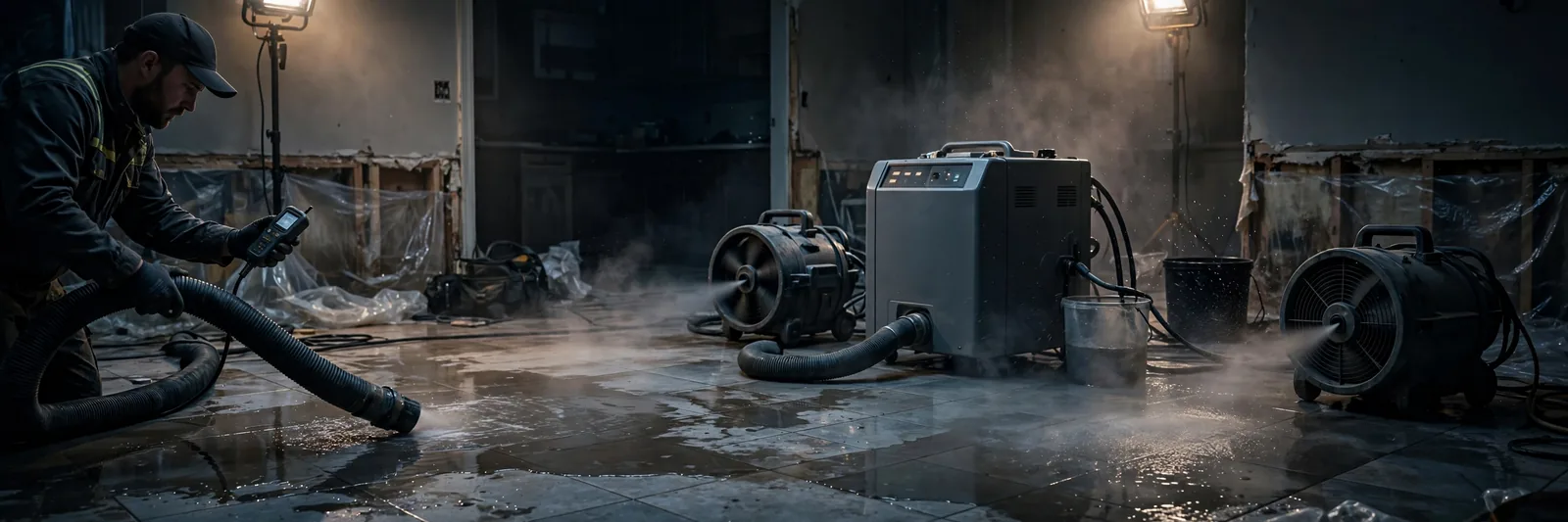
Water damage restoration is the professional process of returning a water-damaged property to its pre-loss condition: extracting the water, drying the structure to verified moisture standards, removing what can't be saved, and rebuilding what was torn out. It is a sequenced, documented discipline governed by the IICRC S500 Standard for Professional Water Damage Restoration, not just drying things out with fans. Updated for 2026.
In Sahuarita, AZ, water damage usually arrives three ways: a sudden plumbing failure, firefighting water after a house fire, or monsoon-season intrusion through roofs and thresholds. Each source behaves differently inside your walls and demands a different response. This guide covers what the term actually means, how the industry thinks about it, and where the line sits between DIY cleanup and a job for a certified crew.
The Two Halves: Mitigation vs. Restoration
People use "water damage restoration" as one phrase, but the industry splits it in two, and the split matters when you read an insurance estimate. Mitigation is the emergency phase: stop the water, extract what's standing, stabilize the structure, prevent secondary damage. Hours and days. Restoration is everything after: controlled drying, demolition of unsalvageable materials, cleaning, and rebuild. Days and weeks.
The split matters because insurers often authorize and pay them separately: a mitigation invoice covers extraction and equipment days; a restoration invoice covers drywall, paint, and flooring. When a contractor hands you a scope, check which phase each line belongs to. Our water damage restoration in Sahuarita covers both phases under one roof.
- Mitigation = stop the damage: extraction, stabilization, emergency tear-out
- Restoration = return to pre-loss: verified drying, demolition, rebuild
- Insurers typically authorize and pay the two phases separately
Water Categories 1, 2, and 3: The IICRC S500 Framework
The IICRC S500 standard classifies intruding water into three categories by contamination level, and the category dictates nearly every decision after, from PPE to whether drywall gets dried or demolished. Category 1 is clean water from a sanitary source, like a supply-line break. Category 2 is "gray" water with significant contamination, washing-machine discharge, for example. Category 3 is grossly contaminated "black" water: sewage, rising floodwater, or anything that traveled through soil.
The part homeowners miss: water degrades in category over time. A clean Category 1 leak sitting 48–72 hours in Arizona heat becomes Category 2 as bacteria multiply. Speed isn't a sales tactic here; it's contamination control:
| Category | Typical source | Risk | Typical response |
|---|---|---|---|
| Category 1, Clean | Burst supply line | Low (degrades with time) | Extract, dry in place, verify with meters |
| Category 2, Gray | Washer overflow | Moderate, bacteria | Extract, remove saturated porous materials, disinfect |
| Category 3, Black | Sewage, floodwater | High, pathogens | Remove porous materials, full disinfection, PPE required |
The Restoration Process, Phase by Phase
A professional job follows the same sequence every time. Inspection and assessment first: moisture meters and infrared cameras map where water traveled, including inside wall cavities. Extraction second: remove standing water before evaporating anything, always faster and cheaper. Drying and dehumidification third: air movers plus dehumidifiers, tracked by daily readings against dry standards. Cleaning and sanitizing fourth, scaled to the category. Restoration and rebuild last: replacing what was removed.
Rebuilding before readings hit the dry standard traps moisture inside the wall, and in Sahuarita's heat, trapped moisture becomes mold within weeks. The sequence exists because physics demands it.
- Inspect and map moisture with meters and infrared cameras
- Extract standing water before attempting to dry anything
- Dry with air movers + dehumidification, verified by daily readings
- Sanitize to the water category, then rebuild to pre-loss condition
The Equipment, Demystified
Each machine does one job consumer gear can't. LGR (low-grain refrigerant) dehumidifiers pull far more moisture per day than residential units and keep working in low humidity. Air movers create high-velocity airflow across wet surfaces to accelerate evaporation. Moisture meters and infrared cameras find water inside walls so drying targets reality, not guesswork. HEPA air scrubbers capture airborne spores during demolition so contamination doesn't spread.
Equipment is the fastest way to tell a professional operation from a future mold problem: readings taken before and after, versus two box fans and a shop vac for a Category 2 loss.
- LGR dehumidifiers, industrial moisture removal that works in dry desert air
- Air movers, engineered high-velocity airflow, not just fans
- Moisture meters + infrared cameras, find hidden water before it becomes mold
- HEPA air scrubbers, capture airborne contaminants during demolition
The Health Risks, by Category
Clean Category 1 water isn't itself dangerous, the risk is what it becomes. Within 24–48 hours in warm conditions, saturated drywall grows mold, and Sahuarita's summer heat compresses that timeline. Category 2 carries bacteria and chemical contaminants; unprotected skin contact invites irritation or infection. Category 3 is genuinely hazardous, requiring respirators, suits, and eye protection.
Porous materials hit by Category 3 water are removed, not cleaned, drywall, carpet pad, and insulation can't be reliably disinfected once contaminated. Anyone offering to "treat" sewage-soaked pad instead of replacing it isn't following the standard.
- Category 1, safe initially, but mold risk within 24–48 hours in heat
- Category 2, bacterial contaminants; gloves and caution minimum
- Category 3, pathogens present; full PPE required, DIY cleanup unsafe
When to DIY, When to Call a Pro, and What Insurance Thinks
A small, clean Category 1 spill caught within minutes on tile is reasonable DIY with a wet vac. Call a professional for any Category 2 or 3 water, water sitting more than a day, or water inside walls or under flooring, hidden moisture is the entire game, and you can't verify what you can't measure.
There's also an insurance reason to call early. Standard HO-3 homeowners policies typically cover sudden and accidental water damage (burst pipes) but exclude gradual leaks, and they exclude flood (rising monsoon water) entirely, which needs separate flood insurance. Carriers also expect prompt mitigation; "failure to mitigate" can reduce a claim. A documented professional response, photos, moisture readings, itemized scope, protects both your home and your coverage. If you're unsure which side of the line you're on, our emergency assessment starts with measurement, not salesmanship.
Frequently Asked Questions
Is water damage restoration the same as water damage mitigation?
What is Category 3 water damage?
How fast does mold grow after water damage in Arizona?
Can I clean up water damage myself?
Does water damage restoration include repairs and rebuilding?
Fire or smoke damage in Sahuarita?
Talk to a local restoration crew today, 24/7 emergency line.
24/7 emergency line, we answer around the clock.